Asteroid & comet impact
Deflection missions require 3–10 years of lead time. Pre-positioned funding isn’t a preference — it’s physics.

Space-risk finance — planetary defense
Humanity can already deflect asteroids, harden power grids, and clear decaying orbits. What's missing is a standing financial architecture to fund it — staged before the next event, not scrambled after.
The problem
Three proven threat domains. Zero dedicated financial infrastructure.
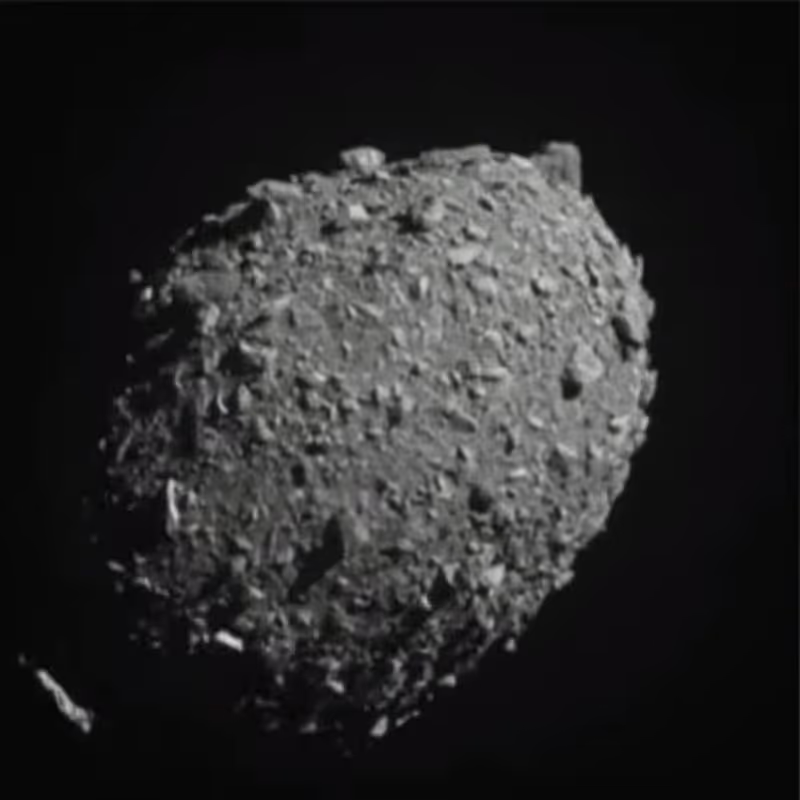
Deflection missions require 3–10 years of lead time. Pre-positioned funding isn’t a preference — it’s physics.
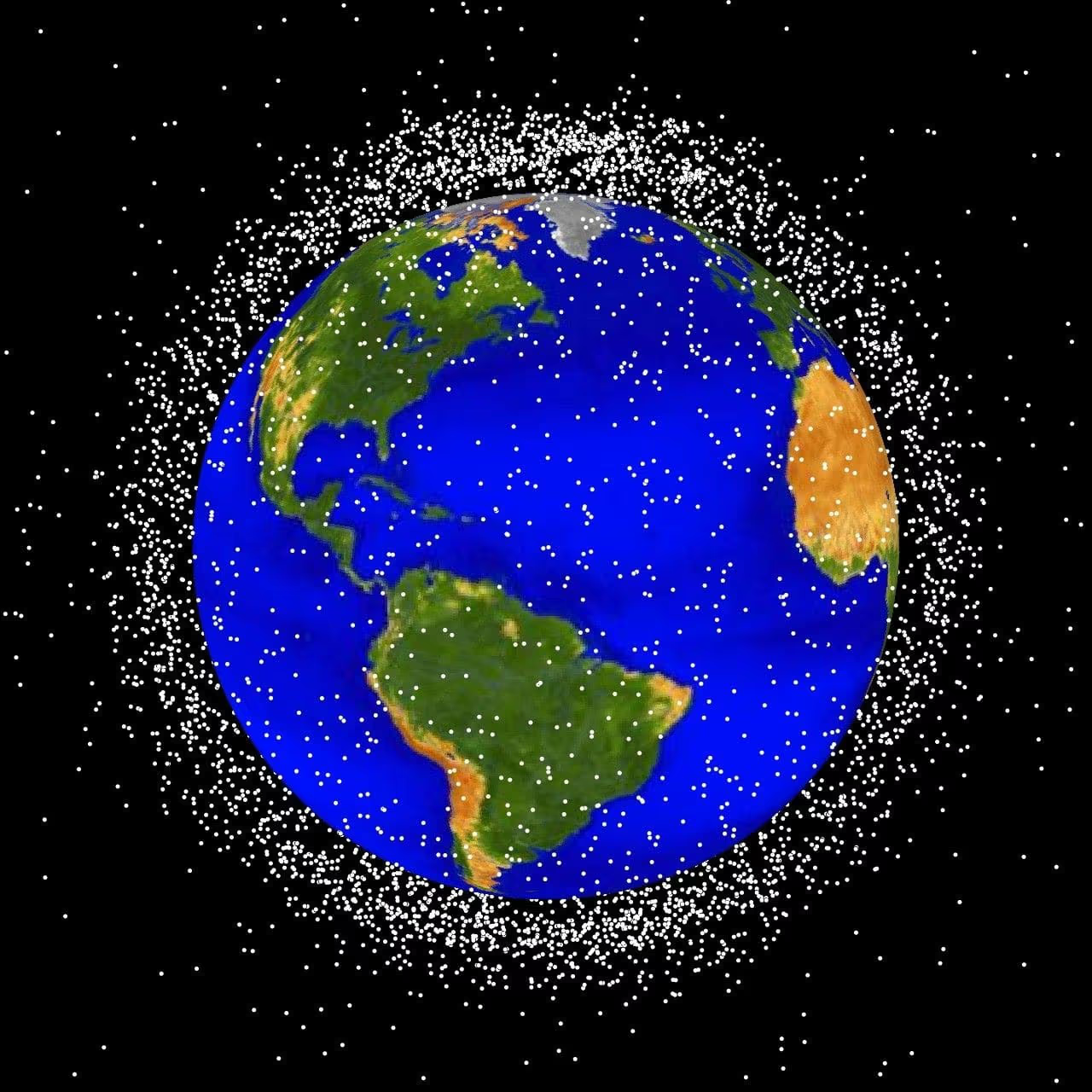
Each collision creates thousands of new fragments. Without funded removal capacity, the cascade accelerates faster than natural orbital decay.
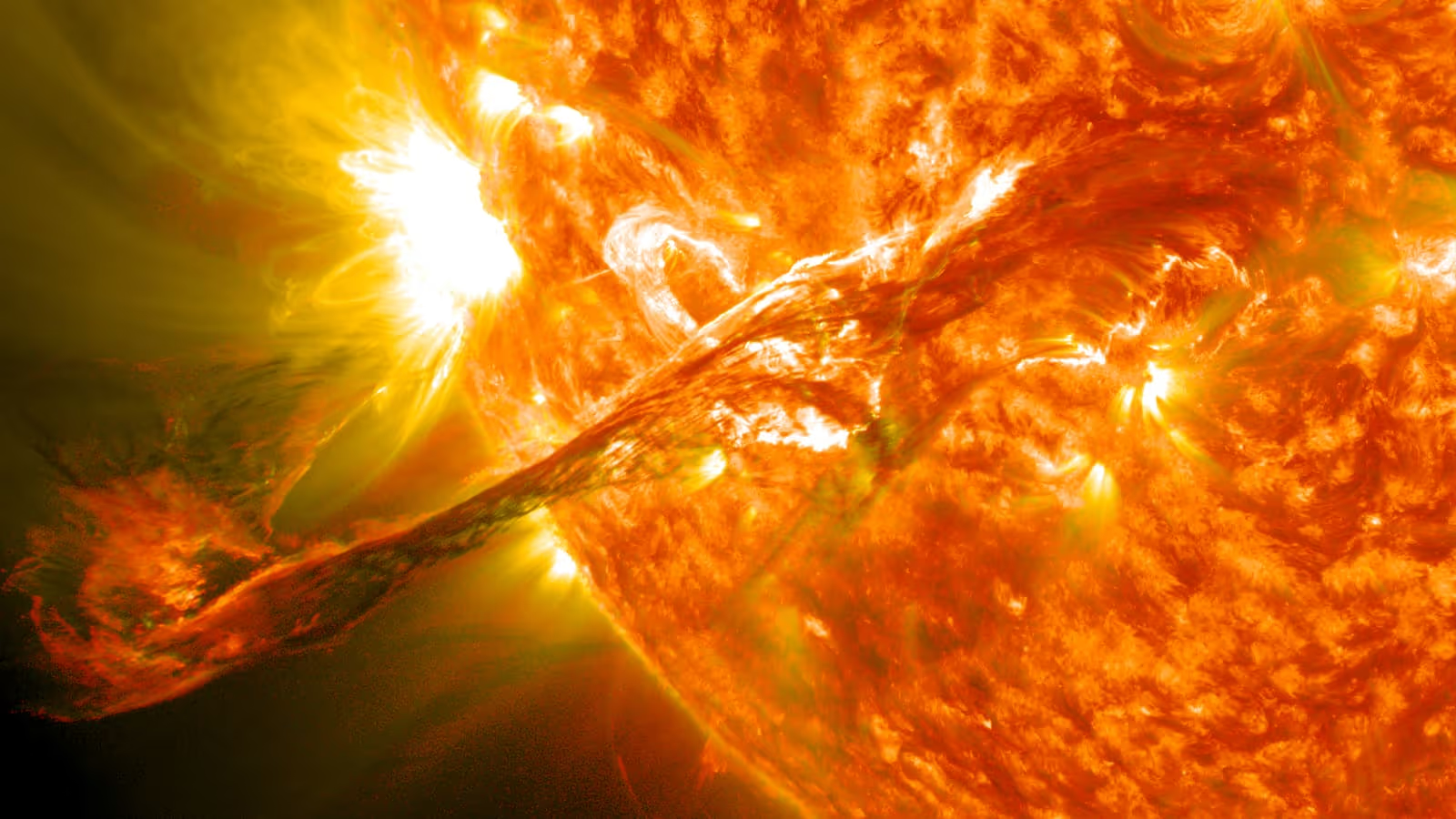
A Carrington-class geomagnetic storm could damage hundreds of high-voltage transformers simultaneously. Replacements take 12–18 months to manufacture.
Proven capability
Proven mechanisms exist for every risk category. None have been applied to space-origin threats.
In September 2022, NASA's DART mission successfully altered the orbit of asteroid Dimorphos. The technical ecosystem for planetary defense is operational and growing.
The gap
Catastrophe-finance mechanisms already move billions for terrestrial risks. Not a dollar is staged for space-origin threats.
Critical Windows
Three converging timelines where the absence of financial architecture becomes the binding constraint.
Asteroid Apophis will pass closer to Earth than our communications satellites.
Projected threshold where collision cascading becomes self-sustaining without active intervention.
Solar Cycle 26 peak — every 11-year cycle carries Carrington-class risk.
The solution
Not inventing new mechanisms. Extending proven ones to all space-origin threats.
Multilateral institution for pooled space-risk defense capital. GDP-weighted contributions fund asteroid deflection, debris removal, and grid hardening — three threats, one treasury.
Capital markets instruments structured for each threat profile: deflection-timeline bonds for asteroid risk, removal-capacity bonds for debris mitigation, and resilience-linked bonds for grid infrastructure.
Transparent framework with scientific oversight spanning COPUOS, ITU, and national grid authorities — coordinating response across orbital and terrestrial domains.
Get involved
Different expertise is needed. Where do you fit?
Governance frameworks and multilateral coordination
Partnership structures and membership models
Mission costs and capability assessments
Get involved
Requests reviewed within 48 hours.
Policy updates, research, and events.
We use cookies to improve your experience and analyze site usage. Privacy Policy